

Gastric Cancer
How common is gastric (stomach) cancer?
The incidence of gastric cancer is falling in the UK with approximately 7,000 cases diagnosed each year. It usually affects the 50-70 age group and is more common in males than females. The majority of cancers found in the stomach are adenocarcinomas.
Who does it effect?
Gastric cancer has been linked to smoking, diet, alcohol and hereditary factors.
How is it detected?
Patients with new onset dyspepsia (abdominal pain, bloating, reflux, belching) should be urgently investigated to exclude gastric cancer. Patients with evidence of weight loss, blood loss (anaemia) or fullness in the upper abdomen should also undergo urgent investigation.
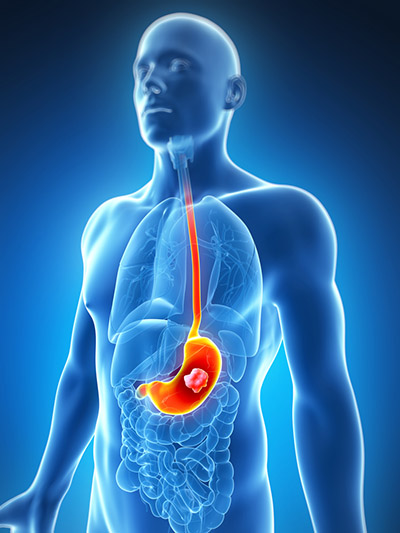
How is the diagnosis made?
The first investigation for dyspepsia is an endoscopy. If an abnormality is found biopsies will be taken and sent the laboratory for analysis. It usually takes 3-5 days to get a result. Once the diagnosis has been made a series of investigations are performed to gain an understanding of the extent of the cancer (cancer staging).
- CT Scan – A CT scan is a quick painless procedure to obtain detailed pictures of the body. Contrast will be given by injection during the procedure to highlight the blood vessels. It usually takes about 15mins.
- PET scan – This is a similar procedure to the CT scan and can sometimes be combined. Glucose is labelled and then administered via injection. Areas of high activity in the body take up the sugar and are then detected by the scanner. It is trying to detect any focus of cancer not picked up on the CT scan.
- EUS – This is a similar procedure to the endoscopy, except the probe has an utltrasound device on the end, which enables the doctor to examine the cancer and surrounding tissue in precise detail. It takes longer than an endoscopy and may require more sedation. This investigation is most useful to examine very early cancers or where there is concern that there may be involvement of other organs.
- Staging Laparoscopy – The stomach cancer is examined by a keyhole inspection of the abdomen. Occasionally, scans do not detect small areas of cancer cells, which are easily seen when viewed with a keyhole camera. The procedure is quick and patients go home a few hours after the procedure.
How is the gastric cancer treated?
The staging tests outlined above enable us to understand how far the cancer has spread. If the cancer remains local to the stomach, then a curative approach is used. Cancer, which has spread away from the stomach to other organs, may not be curable and will require chemotherapy to gain control. The majority of curable cancers will require a combination of chemotherapy and surgery to obtain the best results. In certain situations, radiotherapy will also be considered for further treatment. The LSG works with leading oncologists and gastro-enterologists to provide these services.