

Gastro-oesophageal reflux
What is it?
Gastro-oesophageal reflux describes the exposure of the oesophagus to acid produced by the stomach. It is common with approximately 10-20% of the population experiencing weekly symptoms of heartburn or regurgitation. Almost half the population will suffer from reflux during their lifetime.
Common Symptoms
- Heartburn / indigestion
- Regurgitation
- Acid Brash
- Chest pain
- Cough
- Hoarseness of voice
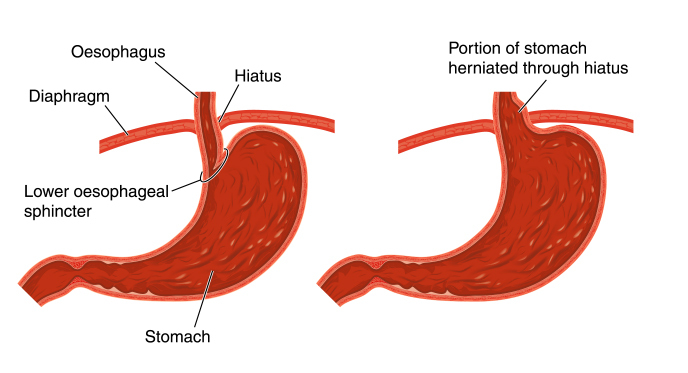
Why does it happen?
When should I seek help?
Gastro-oesophageal reflux is a common and benign condition. However, it can mask more serious underlying conditions if not investigated appropriately. Any patient with new symptoms should be reviewed, especially if associated with any difficulty in swallowing. Patients with persistent or recurrent reflux symptoms should also be considered for endoscopy.
How is it diagnosed?
– Gastroscopy (endoscopy)
Gastroscopy involves the passage of a telescope through the mouth and into the gullet. It is performed with local anaesthetic spray, with the addition of a sedative if required. The procedure assesses the lining of the oesophagus for evidence of acid damage (oesophagitis) and looks for a hiatus hernia. Although only present in the minority of reflux sufferers it can also check for changes which can progress to cancer (Barrett’s Oesophagus). This is detected by biopsies taken at the time of the procedure. It is not painful to have biopsies taken. There may also be inflammation in the stomach and biopsies can be taken to check for Helicobacter Pylori infection.
– Ambulatory pH testing
Gastro-oesophageal reflux is confirmed by measuring the amount of acid present in the oesophagus over a 24-96 hour period. Either a small tube (via the nose) with acid sensors is placed into the oesophagus for 24 hours (catheter pH study) or a small capsule (BRAVO) is placed at the bottom of the oesophagus via endoscopy, which then detaches and is passed spontaneously after 96 hours. During this time the patient carries on performing normal activities and acid exposure in the oesophagus is recorded by sensors. Patients also record symptoms to enable us to understand the relationship between the acid exposure and their symptoms.
– Oesophageal manometry
Oesophageal manometry is a diagnostic test that uses tiny transducers or receivers within a small catheter or tube that is inserted into the oesophagus to measure pressure. This device is used to measure ability of the oesophageal sphincter to relax and to assess the motility of the oesophagus (how well it pushes food and liquid down into the stomach). This is a short procedure, which can be done during a visit for the pH study or as an independent investigation.
How should it be managed?
How effective is surgery?
Are there any risks?
How is the surgery performed?
How is the surgery performed?
How long will it take to recover from the surgery?
Patients are fully mobile after surgery and can commence fluids immediately after. The procedure can be performed as a day-case or a one-night hospital stay. This is mainly to build confidence with oral intake after the surgery. The wound sites will have local anaesthetic injected into them at the time of surgery. This will wear off about 6 hours after the procedure. To stop the sites becoming sore you should take the regular painkillers as instructed. Shoulder tip pain is not uncommon and is due to gas underneath the diaphragm. This should not last longer than 24 hours. You will not be discharged until you are comfortable drinking. On discharge you should be independent and able to climb a flight of stairs.
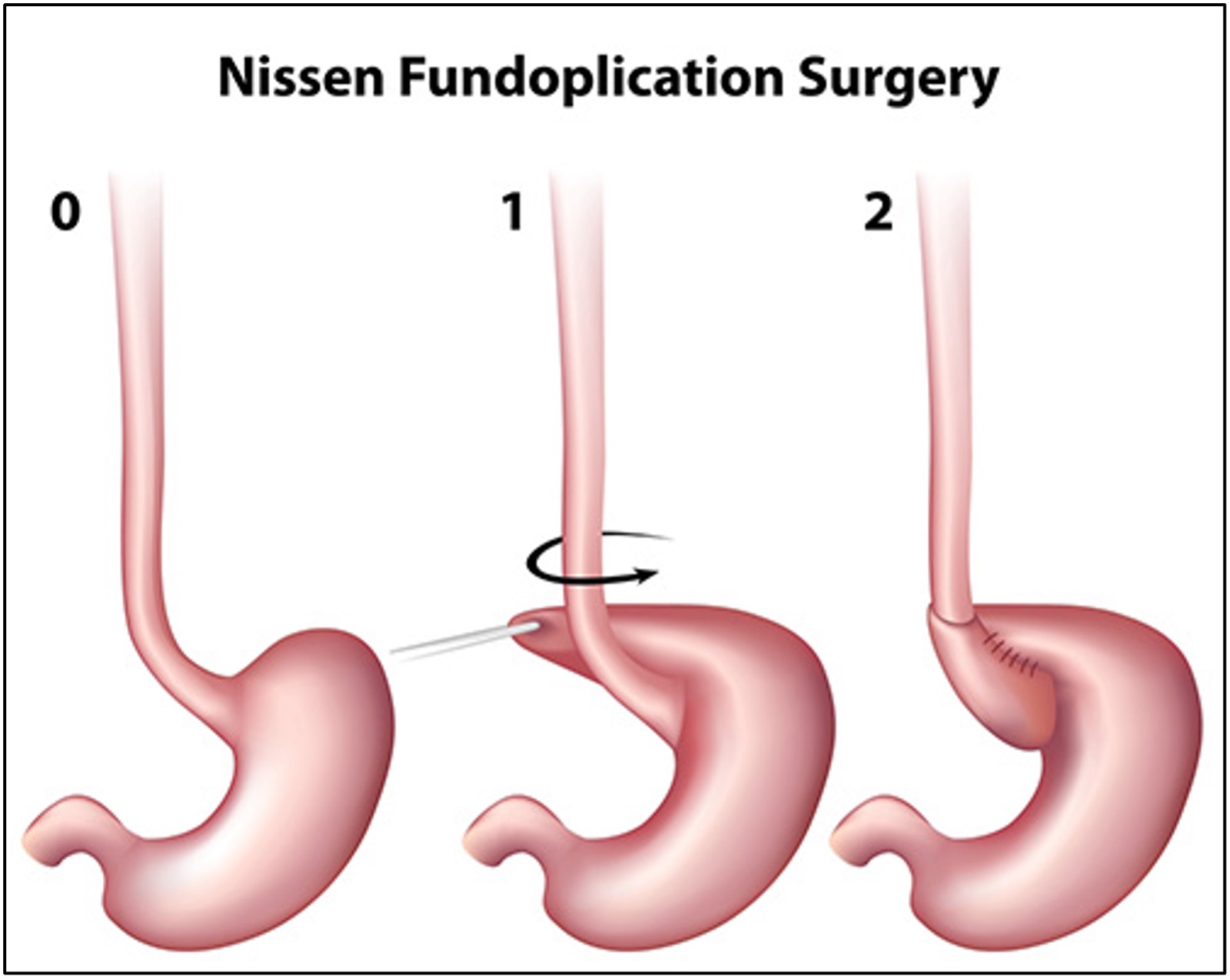
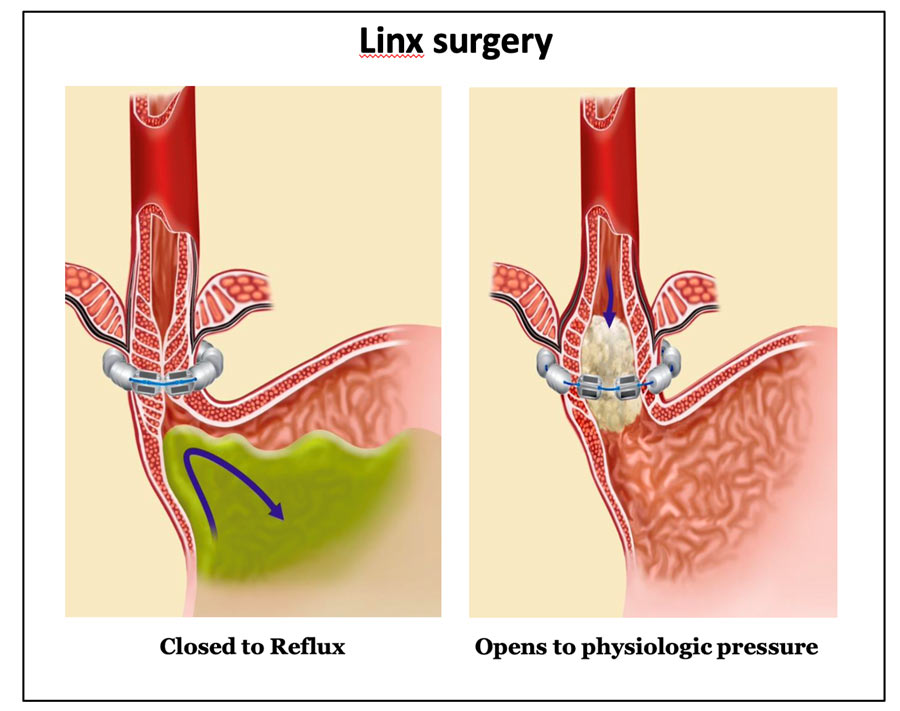
The post-operative dietary plan varies slightly by procedure. Following a fundoplication, patients build up steadily over some weeks from liquids to pureed food and then a soft diet before returning to normal eating. This can vary between individuals with swallowing difficulties prior to surgery a predictor of a slower progression after it. Following a Linx procedure, patients are encouraged to return to a soft diet on the day of the procedure as it is beneficial for the device to function (open and close) earlier.
Link to fundoplication diet sheet
Link to Linx post-op instructions sheet
Where is anti-reflux surgery performed
Which medications will I require after surgery?
You will be discharged from hospital with a supply of simple painkillers with instructions on how to use them. Regular paracetamol is particularly effective and can be combined with an anti-inflammatory (ibuprofen) or a codeine-based drug (dihydrocodeine). Anti-inflammatories are not suitable for all patients and should be taken with food. The codeine-based drugs can cause constipation and should be taken with plenty of fluids. Most patients do not require painkillers after 5 days.
When can I return to work?
When can I drive?
Driving should be avoided in the first week after surgery. Once you can perform an emergency stop in a stationary vehicle and turn to view your blind spot then driving should be safe. It is preferable to contact your insurance company to check for any specific instructions they may have.
Who do I contact if there are concerns?
The group practice telephone is answered in working hours and messages can be left out of hours. Any concerns will be relayed directly to the consultant surgeon on receipt. The hospital ward also provides a 24/7 means of contact. They will contact the consultant about any concerns and are able to give advice if required.
For more information on anti-reflux surgery in London, Hampshire or Surrey please contact us on davies@londonsurgicalgroup.co.uk